
What North Carolina’s Budget Means for Chatham County Students
Last September, North Carolina's public schools began the school year without a state budget, leaving school districts scrambling to plan for teacher salaries, staffing, and other critical expenses. This year, schools opened with a budget already in place. While it included encouraging investments in teacher pay and early childhood education, it also raised concerns about the continued expansion of private school vouchers and the state's long-term commitment to public education.
Here's what Chatham County families should know:
Teacher Pay Still Needs Work
The budget included an average 8% teacher pay raise, with the largest increases going to beginning teachers. Starting teacher pay rose to $48,000 before local supplements—a positive step toward attracting new educators to the profession. In addition, teachers received a one-time bonus based on years of experience: $500 for teachers with 15 or fewer years of experience and $1,000 for those with 16 or more years.
However, the budget did little to address compensation for experienced teachers. Those with roughly 15 to 24 years of experience continue to receive minimal salary increases during what should be the peak of their careers. The budget also did not restore master's degree pay.
Experienced teachers are the backbone of our public schools. They mentor beginning teachers, lead instructional teams, and bring years of expertise to the classroom. Investing in their retention is as important as recruiting the next generation of educators.
Voucher Expansion Continues
The budget directed hundreds of millions of additional taxpayer dollars to North Carolina's Opportunity Scholarship program, which provides vouchers for private school tuition.
State data showed that many of the newly funded scholarships went to students who were already enrolled in private schools, meaning a significant portion of the funding subsidized existing private school tuition rather than helping students transition from public schools.
The budget also included $750,000 each year for the UNC System Office to partner with Parents for Educational Freedom in North Carolina to promote school choice and the Opportunity Scholarship program, along with up to $1 million to administer a new federal school choice initiative.
Every additional dollar spent expanding and marketing private school vouchers is a dollar that cannot be invested in North Carolina's public schools. Here in Chatham County, our public schools educate every child who walks through their doors and serve as the foundation of our community. At the Chatham Education Foundation, we believe investing in strong public schools is one of the best investments we can make in our children's future.
Investing in Early Learning
The budget also included $97 million in recurring federal funding to strengthen North Carolina's child care subsidy program. The funding increased reimbursement rates for providers serving families who receive subsidies and established a statewide minimum reimbursement rate to help child care centers remain financially sustainable.
Quality early childhood education helps children develop the language, social-emotional, and early literacy skills they need to enter kindergarten ready to learn. Supporting affordable child care is an investment not only in working families, but also in the long-term success of students and public schools.
The Bigger Picture
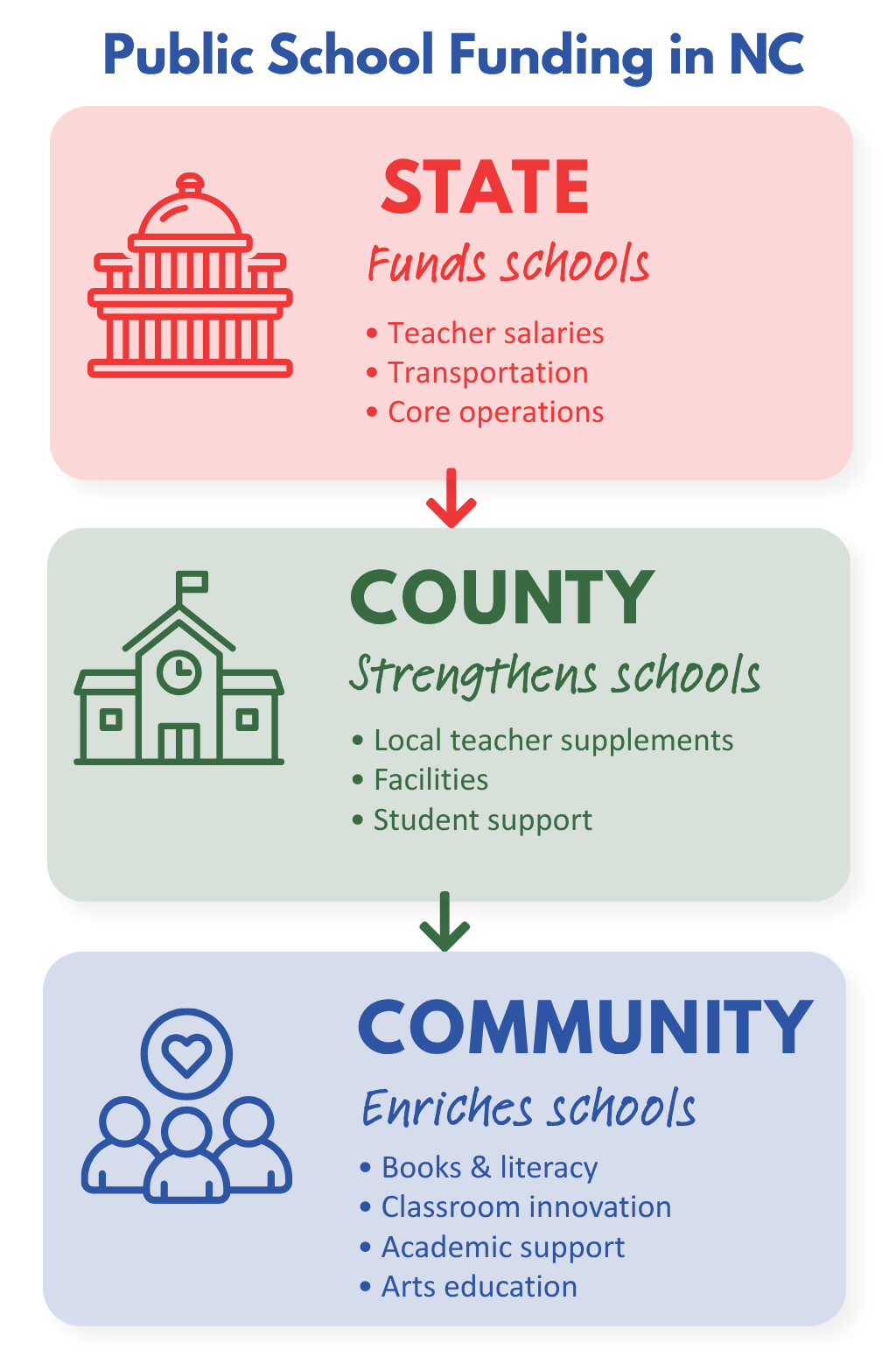
While the state establishes education policy and provides most school funding, county governments invest in local priorities that help schools thrive.
This year, the Chatham County Board of Commissioners approved an additional $3.1 million for Chatham County Schools to help cover teacher compensation, employee benefits, operating costs, and other local priorities. The county also continued its investment in restoring master's degree pay for eligible teachers—an area the state budget did not address.
Communities help fill the gaps that public funding alone cannot. Organizations like the Chatham Education Foundation provide opportunities and critical support that neither state nor local budgets can fully fund—from Books on Break and Teaching Grants to AVID, student emergency assistance, and literacy programs.
The state funds schools. Counties strengthen them. Communities enrich them. By working together, we can ensure every child in Chatham County has the opportunity to succeed.